A garage is easy to ignore when everything works. The door opens, the car goes in, the remote sits in the console, and life moves on. Then the first hard storm arrives, or a cold draught starts creeping into the room beside the garage, or the bottom seal begins to lift just enough to let dust and moisture in. That is usually when homeowners realise the garage door is doing far more than simply opening and closing.
A well-maintained garage door sits at the intersection of safety, comfort, weather protection, and day-to-day convenience. In some parts of Australia, especially in Queensland, that role becomes even more serious. Official guidance around severe storms and cyclones makes it clear that garage doors are not a cosmetic feature. If a garage door fails in extreme wind, it can allow wind into the house and contribute to wider damage to walls and roofing. That changes the conversation from basic upkeep to household resilience.
At the same time, comfort matters. An attached garage can influence the temperature of adjoining rooms, and draught-proofing at the base of doors is one of the practical ways to reduce unwanted heat loss. The garage may never feel like a living room, but it should not have to behave like a wind tunnel either.
The garage door does more work than most people notice
When people talk about home maintenance, they usually think first about roofs, gutters, air conditioning, and external paint. Garage doors rarely make the top of the list, even though they are one of the largest moving elements in the home. They endure repeated use, exposure to weather, and the gradual wear that comes from vibration, dust, moisture, and sun.
That wear often shows up slowly. The door becomes noisier. The seal no longer sits flat. The movement feels less smooth than it did a year ago. Sometimes the issue is obvious, such as visible deterioration or impact damage. More often it is a collection of smaller signs that homeowners acclimatise to without realising. What felt minor in fair weather can become significant once heavy rain, wind pressure, or a long hot season exposes the weak point.
There is also a comfort factor that gets overlooked. If your garage is attached to the house, the door is part of the boundary between indoor conditions and the outdoors. Any gap at the bottom edge, sides, or around adjoining access points can allow draughts to pass through. That affects the garage itself, and in some homes it also affects nearby living areas.
Why storm preparation changes the maintenance conversation
In Queensland, official emergency guidance urges homeowners to prepare before storm season and to stay inside until it is officially safe after a severe weather event. That pre-season window is where garage door decisions matter most. A door that looks serviceable on a calm Saturday can still be poorly suited to high wind conditions.
Queensland cyclone-preparation guidance specifically highlights garage doors. A garage door should comply with AS/NZS 4505 and be correctly rated for wind pressure, or it should have a bracing system that can be installed before a cyclone. That is not a small detail. It means the question is not merely whether the door opens and closes, but whether it is suitable for the wind conditions it may face.
Housing resilience guidance in Queensland also identifies garage door replacement as a practical resilience measure. Replacing an older or non-compliant door and frame with a wind-rated version can be a cost-effective way to improve a home’s resistance to severe weather. That is an important point because many owners assume resilience upgrades always start with large structural projects. In reality, garage door replacement may be one of the clearer priorities when the existing system does not meet current expectations for storm resistance.
This is where judgment matters. Not every old door needs immediate replacement, and not every issue can be solved with weatherstripping alone. Some homes need a proper assessment of whether the existing door is fit for local conditions. If there is doubt about compliance, wind rating, or bracing, that is not the sort of uncertainty to carry into storm season.
Maintenance is not the same as modification
Routine maintenance has a place. It helps a system keep functioning as intended and allows problems to be identified before they worsen. But there is a line between maintenance and structural or safety-related modification, and with garage doors that line matters.
A homeowner can pay attention to condition, noise, visible wear, the fit of the bottom seal, or the way water and dust move around the threshold. It is reasonable to notice if the door is no longer sitting evenly or if there are signs that weather is getting in where it used to stay out. It is also reasonable to keep the area around the opening clear and to think about the performance of the door as part of seasonal preparation.
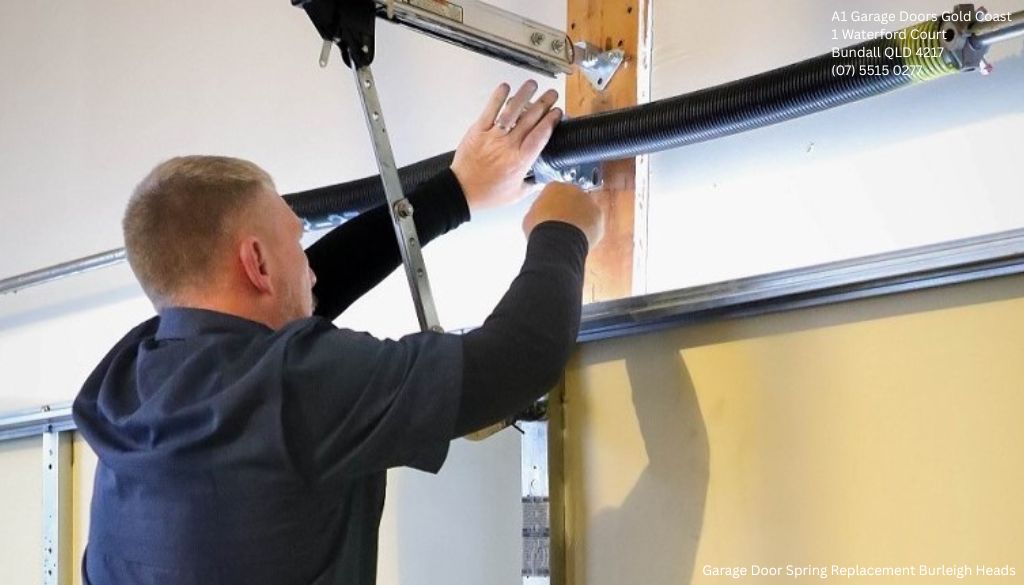
What is not wise is treating safety-critical components as a casual weekend adjustment. Garage door springs, garage door tracks, and garage door openers all form part of a moving system. If a component is worn, misaligned, damaged, or simply beyond its serviceable life, the safest course is professional assessment rather than guesswork. The same goes for questions around bracing or wind suitability.
I have seen homeowners spend more time trying to save a marginal door than it would have taken to make a sound decision in the first place. A cheap patch can feel satisfying in the moment, but it is poor value if the door still performs badly in bad weather or creates a safety risk.
Draught stoppers are small, but they can change how a garage feels
Draught-proofing tends to sound modest compared with structural resilience, but it deserves attention. Australian energy-efficiency guidance recognises that draught stoppers at the base of doors can help reduce heat loss. In practical terms, that means the bottom edge of the garage door is worth looking at, especially if the garage adjoins the home or is used as a workspace, laundry zone, or storage area for items sensitive to temperature swings.
Homeowners often notice comfort issues indirectly. The room next to the garage feels harder to heat or cool. Dust appears more quickly than expected. Leaves or water traces creep under the door after wind and rain. None of those signs proves a single cause on its own, but together they point to air movement and poor sealing at the opening.
A draught stopper is not a substitute for a structurally sound door. It will not make a non-compliant door cyclone-ready, and it should never be treated as a storm-hardening measure on its own. What it can do is improve day-to-day performance by reducing the constant small exchange of outside air at the threshold.
That distinction is important because homeowners sometimes lump all door-related products into one mental category. Comfort products and resilience measures can overlap, but they are not interchangeable. A bottom seal may improve comfort. Wind rating, proper compliance, and bracing deal with an entirely different level of risk.
Where comfort and resilience overlap
The most effective garage work often solves more than one problem at once. If a door is due for garage door replacement, for example, that decision can be framed around several outcomes rather than just one. The new door may improve weather resistance, reduce draughts, support household resilience, and restore smoother operation. Instead of chasing separate fixes over time, one well-judged upgrade can resolve multiple weaknesses.
This is often the more economical way to think, even if it means spending more upfront. An older door with poor sealing, uncertain wind performance, and recurring operational issues tends to absorb money in increments. Each small repair seems manageable, but the overall result may still be a door that is noisy, inefficient, and not suitable for severe weather conditions.
By contrast, when the existing system is basically sound, targeted maintenance makes sense. Replacing worn sealing elements, cleaning up the threshold area, arranging inspection of mechanical components, and verifying storm preparedness can extend useful life without rushing into replacement.
The key is honesty about the starting point. Comfort complaints sometimes reveal deeper performance issues. If a garage is draughty because the bottom edge is no longer sealing, that may be simple. If it is draughty because the whole door no longer sits properly in the opening, the conversation changes.
The parts that deserve respect
People tend to focus on the visible panel of the garage door, but the system includes more than the door face. Garage door tracks guide movement. Garage door openers add convenience, but they also introduce electrical and access considerations. Garage door springs are associated with the door’s lifting mechanism and should always be treated as safety-sensitive components.
That last point is worth dwelling on. Springs are not the place for improvisation. Even when a homeowner cannot identify the exact issue, they can still recognise warning signs such as unusual movement, harsher operation, or a system that no longer behaves consistently. The practical lesson is simple: if a component that controls movement or lifting appears compromised, stop treating it as a nuisance and start treating it as a service call.
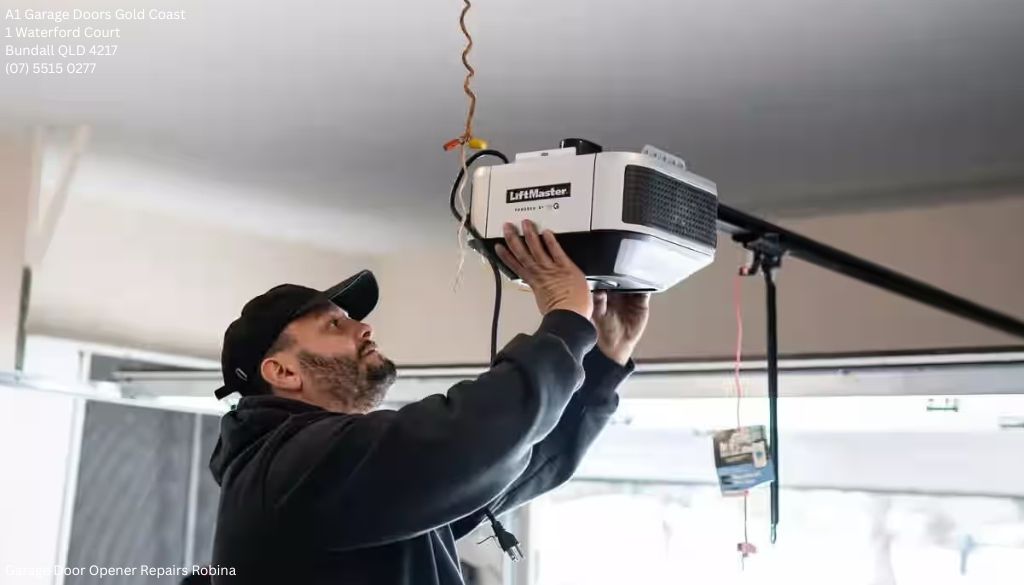
The same broad caution applies to openers. Storm preparation guidance in Queensland includes unplugging electrical items, and that naturally brings garage door openers and related equipment into the seasonal conversation. It also reinforces the need to think through access. A garage that relies entirely on an opener without any planning for power disruption can become more inconvenient at exactly the wrong time.
A sensible pre-season garage check
Before storm season, the garage should be reviewed as part of the whole property, not in isolation. Queensland guidance also advises securing loose outdoor items and parking vehicles under shelter if possible. For many households, the garage becomes part of that preparation plan, which means it needs to be operational before the weather deteriorates, not after.
A concise check looks like this:
Confirm the door is in sound working order and not showing obvious signs of damage or poor fit. Review whether the door is compliant and appropriately rated for wind pressure, or whether an approved bracing system is required. Make sure the garage can actually be used for sheltered vehicle storage and is not blocked by stored items. Check that remotes, access methods, and the garage door opener are understood before severe weather arrives. Unplug electrical items when storm guidance calls for it, and only go outside again when authorities say it is safe.That kind of preparation is not glamorous, but it is practical. It removes uncertainty at a time when uncertainty is expensive.
Knowing when maintenance has reached its limit
There comes a point when the right answer is not another adjustment, another seal, or another attempt to coax a few more months from an ageing system. The challenge is recognising that point early enough to avoid wasted effort.
These signs usually justify a more serious discussion:
That does not automatically mean immediate replacement in every case. It does mean the matter has moved beyond casual observation.
Garage door replacement as a resilience decision
Some owners resist garage door replacement because the existing door still functions. That hesitation is understandable. A working door does not feel urgent in the same way a broken one does. But resilience decisions are often made before failure, not after it.
Queensland guidance specifically notes that replacing existing garage doors and frames with wind-rated versions can form part of household resilience work. It also identifies non-compliant garage doors as a cost-effective replacement target when improving cyclone resilience. That is valuable because it gives owners a clear framework for prioritising work. If the home needs strengthening, the garage door may be a logical place to begin.
There is also a psychological benefit to replacement when it is genuinely warranted. A strong, well-suited door simplifies the storm checklist. Instead of wondering whether the old system will cope, the homeowner can focus on the broader preparation tasks that always demand attention, such as securing loose items, protecting openings where needed, and following official safety advice.
Safety products and the value of buying carefully
Garage door accessories and related products sit within a broader product-safety environment. In Australia, products that are subject to mandatory safety standards must meet those requirements before sale. The practical takeaway for homeowners is straightforward: buy carefully, use appropriate products, and do not assume every low-cost item on the market is equally suitable for a safety-critical application.
That matters most when the product is presented as part of a protective or security-related solution. A draught stopper is one category of product. Bracing and door-system components are another. The higher the stakes, the less room there is for guesswork. If the item affects safety, severe A1 Garage Doors Gold Coast weather performance, or the operation of the garage door itself, quality and suitability matter more than saving a small amount at checkout.
Everyday comfort is not a trivial outcome
It is easy to place all the emphasis on storms, wind, and structural resilience, especially in exposed regions. But everyday comfort has value too. A garage that is less draughty, less dusty, and more stable in temperature is easier to use. It stores belongings better. It makes adjacent rooms more comfortable. It simply feels more finished.
That matters because garages are no longer always just parking spaces. Some households use them for laundry work, hobby benches, freezer storage, bike maintenance, or simple overflow tasks that happen every week. In those settings, the difference between a poorly sealed opening and a properly performing one becomes noticeable very quickly.
The best results usually come from treating the garage door as part of the home envelope and part of the resilience plan at the same time. One perspective without the other tends to lead to blind spots. Comfort-only thinking can underestimate storm risk. Storm-only thinking can miss the daily value of good sealing and reliable operation.
A practical standard for homeowners
If I had to reduce all of this to a working standard, it would be this: the garage door should be safe, suitable for local conditions, and comfortable enough that it is not quietly undermining the rest of the house. That standard is modest, but it is not accidental. It asks the right questions.
Is the system operating properly, including the garage door tracks, garage door springs, and garage door openers? Is the door helping, rather than hurting, the comfort of the spaces around it? Has the bottom edge been addressed if draughts are a problem? Most importantly in storm-prone areas, is the door compliant, correctly rated for wind pressure, or supported by a bracing solution that can be installed before a cyclone?
When those questions are answered honestly, the next step usually becomes obvious. Some garages need nothing more than sensible upkeep and improved draught-proofing. Some need a professional inspection because the signs point to mechanical or alignment issues. Some need garage door replacement because the old system no longer meets the demands placed on it.
What matters is acting before the garage becomes the weak point. That is where maintenance stops being a chore and starts looking like good judgment.